

How to Film a Strong Tape at Home
Self-tape auditions are now the first step for almost every TV, film and commercial casting. For young performers, that means your audition often happens at home — not in the room. The good news? You don’t need expensive equipment or a full studio setup to create a strong self-tape. What casting directors really want is simple: to see and hear you clearly, and to understand your performance.This guide breaks down exactly how to set up, perform and submit a self-tape that works.

1. Keep Your Setup Simple
You don’t need a complicated setup. In fact, simple is better.
Focus on:
- A plain background (white, grey, or neutral wall)
- Your phone or camera at eye level
- A steady shot (use a tripod if possible)
Avoid:
- Busy or messy backgrounds
- Filming in bedrooms with distractions
- Holding the camera by hand
A clean, distraction-free setup helps casting focus entirely on you.

2. Lighting: Make Sure We Can See You
Lighting is one of the most important parts of a self-tape.
Best options:
- Natural light from a window (face the window)
- A simple ring light placed behind the camera
Key tips:
- Light your face evenly
- Avoid strong shadows
- Don’t stand with a window behind you (you’ll appear dark)
If casting can’t clearly see your face and eyes, your tape won’t work — no matter how strong the acting is.
3. Sound Matters More Than You Think
Casting directors need to hear every word clearly.
Keep it simple:
- Light your face evenly
- Avoid strong shadows
- Don’t stand with a window behind you (you’ll appear dark)
You don’t need a microphone — your phone is usually enough if the space is quiet.

4. Get Your Framing Right
Your framing should be consistent and professional.
Standard framing:
- Chest-up shot (head and shoulders clearly visible)
- Camera in landscape (horizontal)
Sometimes casting will also ask for:
- A full body shot (simple — step back and record it)
Avoid:
- Filming too close or too far away
- Cutting off the top of your head
- Filming in portrait unless specifically asked
5. Eyeline: Don’t Look Into the Camera
This is one of the most common mistakes.
When performing:
- Look slightly to the side of the camera
- Imagine the person you’re speaking to is just off-screen
If there are multiple characters:
- Use different, consistent eyelines for each
Only look into the camera if the brief specifically asks for it.
6. Perform Naturally (Especially for Screen)
Self-tapes for TV and film are very different from stage performance.
Keep it:
- Natural
- Real
- Grounded
Think about:
- Where you are (a classroom, home, outside)
- Who you’re talking to
- What you want from them
Small, truthful performances work much better on camera than big, theatrical ones.
7. What to Wear
You don’t need a costume — but you should look right for the role.
Simple rules:
- Wear plain, well-fitting clothes
- Avoid logos and busy patterns
- Choose colours that contrast your background
You can lightly suggest the character:
- A school shirt for a school scene
- A simple colour that fits the role
The goal is to help casting see you in the part — without overdoing it.
8. Use a Reader (But Keep It Simple)
If your scene involves another character, you’ll need someone to read the other lines.
This can be:
- A parent
- A coach
- A friend
Important:
- They should be neutral (not overacting)
- Focus stays on you
- Keep a steady pace
9. Film, Review, Then Send
Before submitting:
- Watch your tape back
- Check lighting, sound and framing
- Make sure the performance feels natural
Then:
- Follow submission instructions carefully
- Send it on time (or early if possible)
Late submissions create stress and may not be accepted.
10. Don’t Overthink It
This is the most important part.
You can:
- Have a great tape and not get a recall
- Be perfect for the role and still not get it
Casting is about:
- Fit
- Age
- Look
- Chemistry with other actors
Not just talent.
If you’ve prepared well and sent a clear, confident tape — you’ve done your job.
Final Thoughts
Self-tape auditions are a skill — and like any skill, they get easier with practice. — Keep it simple.— Focus on clarity.— Enjoy the process. And remember — casting directors want you to be great.
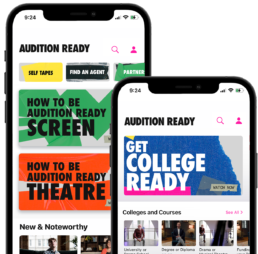
Get Audition Ready Today
Want more support with self-tapes, auditions and confidence?
The Audition Ready app gives young performers access to:
— Casting director advice
— Self-tape tutorials
— Acting and musical theatre training
— Confidence and mindset support
Explore the app and start preparing with confidence.